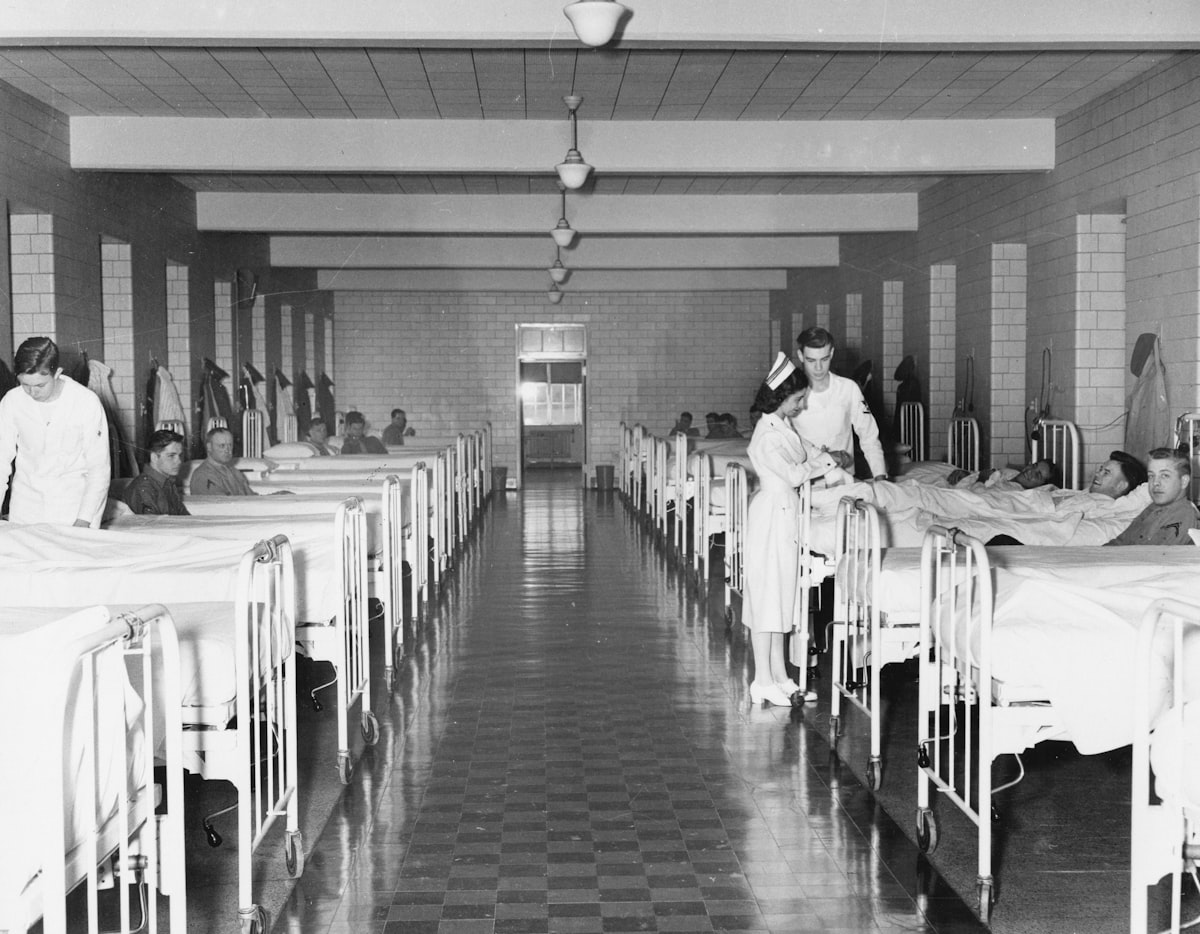
Inpatient care is the most complex operational domain in any hospital. When a patient is admitted, they move through a multi-department journey — from emergency triage or planned admission to bed allocation, nursing care, investigations, consultations, procedures, and ultimately discharge. Without a robust IPD management system, this journey is riddled with communication gaps, documentation errors, and billing discrepancies that cost hospitals money and compromise patient safety.
An IPD management system is the module within a hospital management software (HMS) that digitises and coordinates every step of the inpatient journey. This guide explains how IPD software works, what features hospitals in India should prioritise, and how Omniworks HMS delivers a comprehensive inpatient management system as part of its 19-module all-inclusive platform.
Key Statistics
- 30% reduction in average length of stay reported by hospitals after implementing digital IPD management workflows (Source: HIMSS Asia Pacific Survey)
- 25% reduction in billing disputes and revenue leakage in hospitals with fully integrated IPD billing systems (Source: CII-Deloitte Indian Healthcare Report)
- 40% of Indian hospital revenue comes from inpatient services, where billing accuracy directly impacts profitability (Source: FICCI Healthcare Report 2025)
What Is an IPD Management System?
IPD stands for Inpatient Department — the part of the hospital that manages patients who are formally admitted and stay overnight or longer. An IPD management system is the software module that handles every administrative and clinical workflow from the moment a patient is admitted to the moment they are discharged.
In a traditional Indian hospital without an IPD software, this journey involves dozens of handwritten forms: admission register, bed allocation chart, nursing progress notes, doctor visit records, medication administration record (MAR), investigation request slips, and finally a hand-tallied discharge bill. Each handoff between departments is a potential point of error or delay. An IPD management system replaces all of this with a single connected digital workflow where every action is recorded, timestamped, and immediately visible to all authorised staff.
Core Features of an IPD Management System
Admission Management: When a patient is admitted — whether from the OPD, emergency department, or as a planned surgical case — the IPD module creates a digital admission record linked to the patient's existing UHID and health history. The admission form captures diagnosis, admitting doctor, estimated length of stay, insurance or TPA details, and consent documentation. Bed allocation is handled in real time, with the current bed occupancy map displayed on screen.
Bed and Ward Management: The bed management dashboard gives ward staff and administrators a live view of every bed in every ward — occupied, vacant, under cleaning, reserved. Bed transfers between wards are recorded with timestamps. Housekeeping is automatically notified when a bed is vacated, ensuring turnaround time is tracked and managed.
Nursing Notes and Care Documentation: Nurses document vital signs, intake and output records, medication administration, wound care notes, and shift handover information directly in the IPD module. This eliminates illegible handwritten notes and ensures every care interaction is timestamped and attributed to the nurse who performed it — critical for NABH audit compliance.
Doctor Visit Records and Progress Notes: Consultants record daily visit notes, updated diagnoses, treatment plan changes, and procedure orders directly in the IPD module from any workstation or tablet. The entire clinical record — accessible to all treating doctors — is a single source of truth that eliminates conflicting paper notes.
Investigation and Procedure Integration: Lab tests, radiology investigations, and procedure orders placed during the inpatient stay are linked directly to the IPD record. Results flow back automatically from the lab and radiology modules, appearing in the doctor's IPD dashboard without phone calls or manual collection.
Discharge Management: Where IPD Software Eliminates the Biggest Delays
Patient discharge is one of the most operationally challenging moments in inpatient care. In hospitals without IPD software, discharge involves manually gathering and cross-checking charges from multiple departments, hand-calculating the final bill, typing the discharge summary, and then waiting for doctor approval — a process that frequently takes 4–8 hours and ties up beds that other patients need.
A digital IPD management system transforms discharge from a bottleneck into a streamlined process. Here is how:
Real-time billing accumulation: Every charge incurred during the inpatient stay — daily ward charges, nursing procedures, medicines dispensed by pharmacy, lab investigations, doctor consultation fees, OT charges — is captured automatically as it occurs. By the time discharge is initiated, the bill is 95% complete. No manual department-by-department charge collection is needed.
Automated discharge summary: The discharge summary template is pre-populated with the patient's admission details, diagnoses, investigations, procedures, and medications from the IPD record. The treating doctor reviews, edits, and digitally approves the discharge summary — which is then sent to the patient via WhatsApp as a PDF.
Insurance and TPA final settlement: For insured patients, the final bill is automatically formatted for TPA claim submission, with all supporting documents attached from the IPD record. Pre-authorisation limits are cross-checked and any patient co-payment is calculated automatically.
IPD Software and NABH Compliance
The National Accreditation Board for Hospitals (NABH) sets rigorous documentation standards for inpatient care. Hospitals seeking NABH accreditation or maintaining existing accreditation face regular audits of nursing documentation, medication administration records, informed consent, and clinical audit trails.
A well-implemented IPD management system creates a comprehensive, timestamped audit trail for every clinical action — exactly what NABH auditors look for. Specific compliance benefits include: medication administration records with nurse attribution, daily nursing assessment documentation, signed consent forms linked to the patient record, doctor visit logs with timestamps, and complete investigation result trails.
Omniworks HMS IPD module is designed with NABH documentation requirements in mind, covering all mandatory documentation formats and report structures expected during accreditation assessments.
IPD Management and ABDM Compliance
Under ABDM (Ayushman Bharat Digital Mission), hospitals are expected to create and share digital health records for inpatient episodes. This includes digital discharge summaries in FHIR-compatible formats, linkage of the inpatient episode to the patient's ABHA (Ayushman Bharat Health Account), and patient-consented sharing of the complete inpatient record with the national PHR ecosystem.
Omniworks HMS IPD module supports all of these ABDM requirements, ensuring that your hospital's inpatient records contribute to — and benefit from — India's national digital health infrastructure.
Omniworks HMS IPD Module: What It Delivers
Omniworks HMS delivers a comprehensive IPD management system as part of its all-inclusive platform — available in every plan tier from Basic upwards. Key capabilities include: real-time bed management with occupancy map, digital admission and consent forms, nursing documentation with vital sign tracking, doctor progress notes and consultation records, investigation and procedure integration with lab and radiology modules, automated billing accumulation, discharge summary generation with digital approval, WhatsApp delivery of discharge summaries and prescriptions, and complete NABH-aligned documentation.
For hospitals in India managing 15 to 200 beds, Omniworks IPD module eliminates the most common sources of revenue leakage, reduces average discharge time from 6 hours to under 2 hours, and provides the documentation trail required for both NABH accreditation and ABDM compliance.
Frequently Asked Questions
What is an IPD management system in a hospital?
An IPD (Inpatient Department) management system is software that manages the complete lifecycle of a hospital admission — from bed allocation and nursing documentation to investigation tracking, discharge summary generation, and final billing. It digitises all workflows from admission to discharge in a single connected system.
How does IPD software reduce billing disputes in hospitals?
IPD software automatically accumulates all charges — ward charges, nursing procedures, medicines, investigations, procedures — as they occur during the admission. By discharge, the bill is pre-built from real data with no manual tallying. This eliminates the missed charges and calculation errors that cause billing disputes, reducing revenue leakage by up to 25%.
Does IPD management software help with NABH accreditation?
Yes. IPD software creates a comprehensive, timestamped audit trail covering nursing notes, medication administration records, doctor visit logs, consent forms, and investigation results — exactly the documentation NABH auditors assess. Omniworks HMS IPD module includes all mandatory NABH documentation formats.
Is IPD management included in the Omniworks Basic plan?
Yes. The IPD management module is included in all Omniworks HMS plans — Basic (₹15,000/year), Standard (₹25,000/year), and Premium (₹35,000/year) — with no additional charge for IPD functionality regardless of plan tier.
How does Omniworks HMS handle discharge summaries?
Omniworks HMS auto-generates discharge summaries from the patient's IPD record — pre-populated with diagnoses, investigations, procedures, and medications. The treating doctor reviews and digitally approves the summary, which is then automatically sent to the patient as a PDF via WhatsApp and stored in the patient's digital health record for ABDM sharing.
Omniworks HMS is trusted by 100+ hospitals across India. Start with a free demo, no commitment required.
Book Free Demo →
Vamshi Rajarikam
OmniWorks India Team
Last updated: