TL;DR: Fingerprint attendance was the default for Indian hospitals through the 2010s, but it's quietly breaking down in 2026. Gloves, wet hands, PPE, hygiene concerns, and shared-surface infection control are pushing hospitals toward contactless face recognition kiosks. This post covers why fingerprint scanners keep failing in hospital environments, what's replacing them, and how to plan the switch without disrupting payroll.
If you've run an Indian hospital through the last five years, you know the fingerprint scanner story. It arrived in the mid-2010s as the "modern" replacement for cards and paper registers. For a while, it worked. Then the gloves happened. Then COVID happened. Then the scanner itself became a hygiene problem. And one morning, you looked at the queue at the entrance and realised more than half the staff were entering their attendance on paper anyway.
Key Statistics
- 85% to 95% — staff voluntarily switch to face recognition in parallel runs (Source: OmniWorks deployments)
- 2 to 4 weeks — typical single-site transition timeline (Source: Customer rollouts)
- Contactless — post-COVID infection-control requirement (Source: WHO guidance)
This post explains why fingerprint attendance breaks down in hospitals specifically, what's actually replacing it, and how to plan the transition without creating a payroll mess. If your hospital is still running on fingerprint scanners in 2026, the question isn't whether to switch; it's when.
Why do fingerprint scanners fail in hospitals?
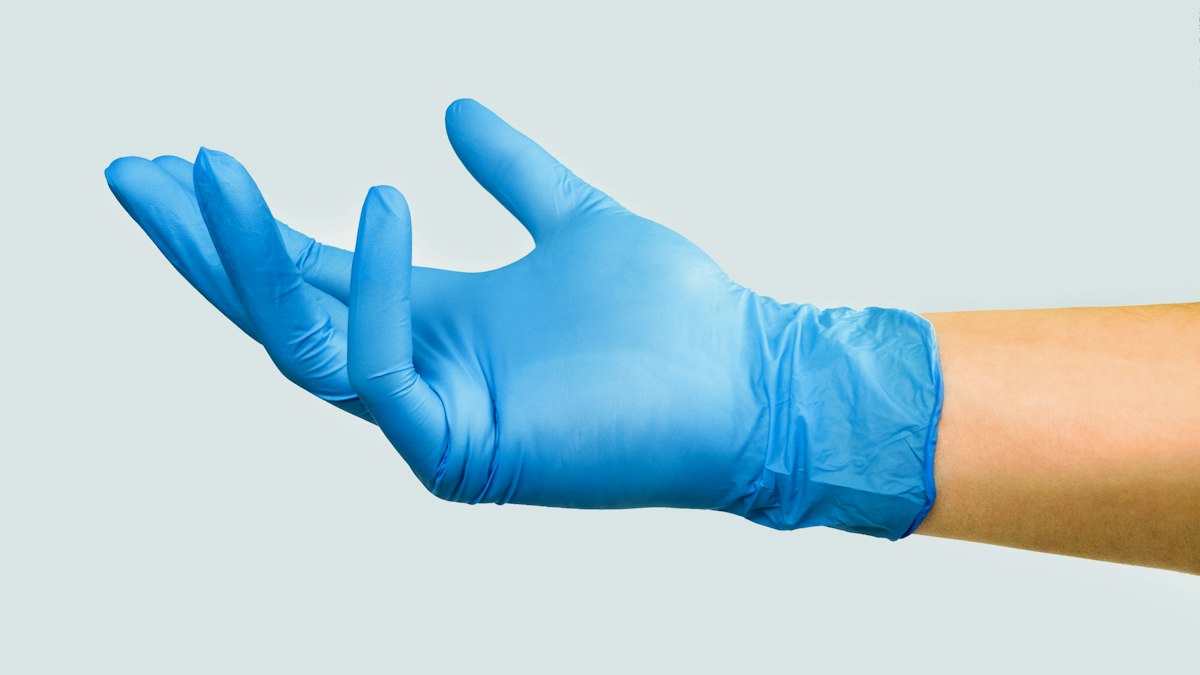
Fingerprint scanners fail in hospitals because staff routinely have hands that scanners can't read. Nurses and OT staff wear gloves. Housekeeping has wet or chemical-exposed hands. Kitchen staff have grease. Security staff in winter have dry, cracked skin. Each of these conditions defeats the optical or capacitive sensor in ways that no firmware update can fix.
The problem is physical, not software. A fingerprint scanner needs clean ridges on dry skin in direct contact with the sensor surface. Hospital staff spend most of their shift with exactly the opposite condition: gloved, washed, disinfected, or handling materials that contaminate the fingertip. Research in healthcare settings has documented the reliability drop for fingerprint systems when gloves and frequent handwashing are part of normal workflow.
The consequence is predictable. Staff remove gloves to punch in, punch out, re-glove, and walk to their station. That adds 30 to 60 seconds per punch and creates an infection-control nightmare. Or staff simply stop using the scanner and sign a paper register, which breaks the entire value proposition.
The hygiene problem no one talks about
Separate from accuracy, there's a shared-surface hygiene problem. In a building where infection control is a daily priority, asking 500 staff to press the same glass plate twice a day was always questionable. After COVID, it became untenable for many hospital leadership teams.
WHO guidance on infection prevention highlights high-touch surfaces as infection transfer points, and a fingerprint scanner at the main entrance of a 500-bed hospital is one of the highest-touch surfaces in the building. Some hospitals tried to solve it by keeping sanitiser next to the scanner, but that creates a new problem: damp fingers work even worse.
Contactless attendance, whether face, iris, or voice, eliminates the problem at the source. The scanner never touches the employee, so it never becomes a transmission vector.
Are face recognition systems really better?
Yes, for hospital environments specifically. Face recognition beats fingerprint in hospitals because staff can authenticate while gloved, masked (partially), and with wet hands, because there's no shared surface to sanitise, and because modern on-device matching is now fast enough that the user experience is actually better than a fingerprint tap.
The accuracy argument used to favour fingerprints. That stopped being true a few years ago. NIST's ongoing face recognition vendor tests show that top face recognition algorithms now operate with error rates well below fingerprint systems in real-world conditions, especially once liveness detection is in place.
The speed argument used to favour fingerprints as well. That's also no longer true. A modern face recognition kiosk using on-device TensorFlow Lite matching identifies an employee in under a second, which is faster than a typical fingerprint scan plus the 5 to 10 seconds of repositioning when the first attempt fails.
What happens when staff wear gloves, masks, or PPE?
Face recognition handles most hospital PPE gracefully. It handles surgical masks well if the nose bridge and eyes are visible. It handles gloves perfectly because gloves don't touch the sensor. It handles wet hands the same way: they never interact with the system. The only PPE configurations that trip face recognition are full N95 fit-test masks combined with face shields, and those are short-shift scenarios (OT, isolation wards) where a secondary authentication method is usually acceptable anyway.
For normal day-to-day PPE (standard surgical mask, scrubs, gloves), face recognition works without staff adjusting anything. OmniStaffSense and similar modern systems are tuned for exactly this scenario: identify through a mask, ignore gloves entirely, and deliver a sub-second response.
For high-PPE environments, most hospitals handle OT and ICU attendance differently anyway. Staff typically badge in at a lower-security checkpoint before donning full PPE, so the kiosk sees the unmasked face first.
The switching playbook
The hospitals that have moved off fingerprints successfully follow the same pattern. It's not dramatic; it's disciplined.
Step 1: Pick the noisiest entry point first. The entrance where fingerprint failure is most visible (usually main OPD) is also where the new system's value shows up fastest.
Step 2: Run in parallel for two weeks. Install the face recognition kiosk next to the fingerprint scanner. Staff are free to use either. Watch the usage data.
Step 3: Compare the logs. By the end of week two, you'll typically see that 85% to 95% of staff have switched to the new kiosk on their own. Paper register usage drops to near zero.
Step 4: Decommission the fingerprint scanner. Keep it for two more weeks as a fallback, then remove it completely.
Step 5: Roll out to remaining entry points. Now you know exactly what works, and you can move fast. OmniStaffSense's multi-tenant design means one app build handles many sites.
Throughout, the HMS payroll module keeps running normally. OmniWorks HMS accepts attendance events from both the old scanner and the new kiosk simultaneously, so there's no payroll cutover risk.
Which hospital roles benefit most from face-based attendance?
The roles that suffered most from fingerprint failures are the ones that gain most from face. Expect the biggest wins with nursing staff (always gloved during clinical tasks), OT and ICU teams (constantly washing and re-gloving), housekeeping (wet or chemical-exposed hands), kitchen and food services (food-handling gloves), and security (cold or dry-skin hands during night shifts).
Administrative staff and doctors usually find fingerprint and face about equally good, but even for them, the contactless experience is cleaner. For the hospital overall, the switch also helps the staff who were never in the attendance system at all: contractors, interns, visiting consultants, and trainees are much easier to enrol for face recognition than for fingerprint because enrolment is a single 30-second face capture, not a multi-finger enrolment session.
Conclusion
Fingerprint attendance had a good run in Indian hospitals, but its failure modes are structural, not fixable. Gloves, hygiene, speed, and staff frustration all point to the same answer: contactless face recognition is the standard for hospital attendance in 2026.
The transition is less painful than most hospital administrators expect. A two-week parallel run, a clean cutover, and the right on-device face recognition product are all you need.
If your hospital is still running on fingerprint scanners and the daily frustration has reached the boardroom, book a free demo of OmniStaffSense. We'll walk through your entry-point map, propose a pilot plan, and show you exactly how a kiosk behaves with gloved, masked, wet-handed staff.
Frequently Asked Questions
Is fingerprint attendance being phased out in Indian hospitals? Most mid-to-large hospitals are actively replacing fingerprint scanners with contactless face recognition kiosks. Smaller hospitals are still mixed, but the direction is clear: new deployments rarely choose fingerprint when face is available at similar cost.
Why do fingerprint scanners struggle with hospital staff? Because hospital staff routinely wear gloves, have wet hands from handwashing and disinfection, or have chemical exposure from cleaning agents and food handling. All of these conditions defeat the sensor regardless of brand or firmware version.
Is face recognition more accurate than fingerprint? In real-world hospital conditions, yes. Lab-test accuracy used to favour fingerprints, but once gloves, wet hands, and PPE are factored in, face recognition produces far fewer failed authentications in a typical shift.
Can I keep fingerprint and face attendance running at the same time? Yes. Most HMS platforms accept attendance events from any source, so you can run both systems in parallel during a transition and cut over when you're confident. OmniWorks HMS supports this pattern directly.
How long does the switch from fingerprint to face usually take? For a single-site hospital, typically two to four weeks including pilot, parallel run, and full rollout. Multi-site hospital chains plan for six to ten weeks to stagger enrolment across facilities.
Omniworks HMS is trusted by 100+ hospitals across India. Start with a free demo, no commitment required.
Book Free Demo →
Vamshi Rajarikam
OmniWorks India Team
Last updated: