TL;DR: Most Indian hospital labs still have a technician reading a value off an analyzer screen and typing it into the HMS by hand. That manual step is slow, error-prone, and legally risky. LIS middleware sits between your analyzer and your HMS and automates the handoff, so results reach doctors in seconds with a full audit trail. Here's what it does, why it matters, and how to evaluate one.
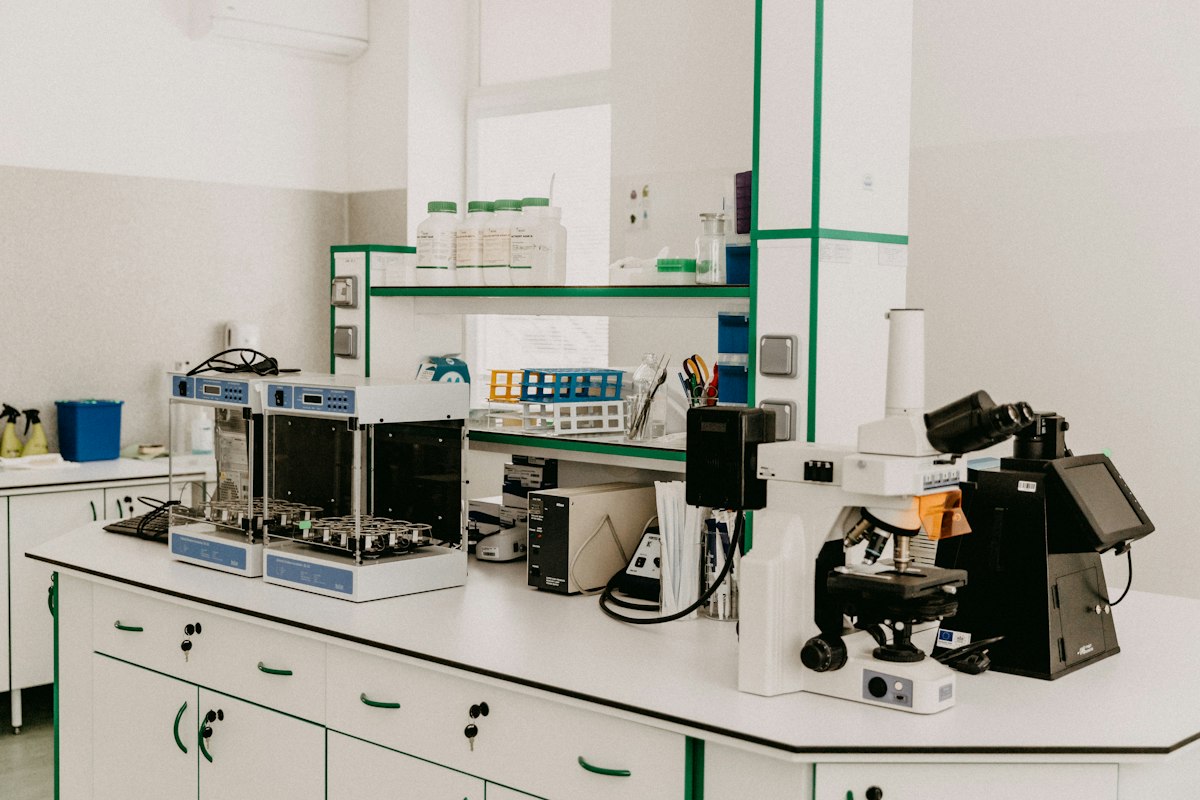
Walk into most mid-sized Indian hospital labs at 10 a.m. and you'll see the same thing. A Mindray BC-5000 finishes a CBC, prints a slip, and the technician carries it to a desk, types the values into the HMS, and hopes they didn't transpose a digit. Multiply that by 150 tests a day, across three shifts, across dozens of staff, and you have a system that's held together by human attention alone.
Key Statistics
- 1% to 4% — manual lab data-entry error rate (Source: NCBI)
- 1 to 2 seconds — analyzer to HMS result capture with middleware (Source: OmniWorks)
- 15% to 25% — of a technician shift typically lost to typing results (Source: OmniWorks analysis)
It's a system that breaks. Studies of clinical laboratories have consistently shown that manual data entry is one of the top sources of pre-analytical and post-analytical errors, some of which change patient treatment decisions. And as NABH-accredited hospitals know, every typo is also a compliance risk.
LIS middleware removes the human middleman between the lab machine and the HMS. Here's why that matters, and what a good middleware layer should do.
What is LIS middleware?
LIS middleware is software that sits between your laboratory analyzers and your hospital management system. When an analyzer produces a result, the middleware captures it automatically, stores it locally, and pushes it to the HMS over your internal network, with no retyping. It runs 24/7 on a standard Windows PC in the lab.
Think of it like an interpreter. Analyzers speak their own protocols (ASTM, HL7, raw TCP streams, serial output). Your HMS speaks HTTP and expects structured JSON. The middleware translates between the two, so your HMS doesn't need to know anything about Mindray's data format and your analyzer doesn't need to know about your hospital's API.
It also does more than translate. A good middleware layer stores every result locally in an encrypted database, flags abnormal values, lets technicians validate or reject runs before results go to the doctor, and keeps a complete audit trail for NABH and NABL inspections.
Why are Indian hospital labs still on paper?
Three reasons. Most Indian hospital labs run on paper because analyzer vendors rarely ship an HMS integration out of the box, custom integration work is expensive, and for small and mid-sized hospitals the cheapest path has always been "let the technician type it in." That calculation is changing as middleware becomes affordable and per-device-licensed.
The first reason is vendor lock-in. Mindray, Sysmex, Beckman, Transasia: each ships its own software stack focused on the analyzer, not on talking to your HMS. HL7 and ASTM standards exist, but implementing them well for each model takes specialised engineering work most hospitals don't have in-house.
The second reason is cost. Historically, LIS integration meant hiring a vendor to write custom glue code, often priced per integration, and sometimes tied to a specific HMS version. Hospitals with five analyzers and a lean IT budget simply skipped it.
The third reason is habit. Once a lab has trained twenty technicians to enter results manually, switching to an automated pipeline feels disruptive, even when the long-term gain is obvious.
What LIS middleware actually does
A well-designed LIS middleware covers four workflows. Each one replaces an error-prone manual task with an automated one.
Result capture. The middleware listens on the analyzer's network port or serial connection, parses the incoming message, and writes it to a local encrypted database. This happens in 1 to 2 seconds after the analyzer finishes a run.
Result delivery. The captured result is pushed to the HMS over HTTPS, mapped to the correct patient, test, and order. The ordering doctor sees the value on their screen before the technician walks back to the desk.
Quality control. Abnormal results (values outside reference range) are flagged in a live dashboard. Technicians can validate runs before they go live, reject faulty runs, or re-sync a result that failed to upload the first time.
Audit and reporting. Every action gets timestamped: result received, validated, pushed, rejected, modified. When NABH or an insurance TPA asks "who entered this and when," the log has the answer.
How does LIS middleware reduce errors?
It reduces errors by eliminating the keystroke. Human data entry has an error rate commonly cited between 0.5% and 1% per field, which sounds small until you multiply it by thousands of test values per week. Machine-to-machine transfer drops that to effectively zero, because the number in the HMS is the same number the analyzer emitted, byte for byte.
It also catches silent failures. If an analyzer disconnects mid-run, the middleware logs it. If a result fails to upload to the HMS, the middleware retries and alerts the operator. Manual workflows don't have either safety net: if the technician forgets to enter a value, no one notices until the doctor asks for it.
What should you look for in an LIS middleware product?
Four things matter more than features. Look for broad analyzer support (especially the models you already own), native integration with your HMS (ideally from the same vendor), per-device licensing so costs match usage, and on-premise deployment so patient data never leaves your hospital network.
Here's a practical checklist:
- Supported analyzers. Does it already speak to your Mindray BC-5000, BC-5150, or BS-series? Adding a new model after purchase shouldn't require an engineer visit.
- HMS integration depth. Does it just dump values into a field, or does it map results to the patient, order, and test correctly? OmniWorks LIS Middleware was built against OmniWorks HMS, so this mapping is native.
- Offline and on-premise. Can it keep working if your internet goes down? Does patient data stay inside your network? For Indian hospitals worried about the DPDP Act 2023, this is no longer optional.
- Audit trail. Every NABH-accredited lab needs a who/what/when log. The middleware should produce it automatically.
The hidden benefit: NABH and compliance
Beyond speed and accuracy, LIS middleware makes accreditation audits dramatically easier. NABH's laboratory accreditation standards expect traceability of every result: who produced it, who validated it, when it was reported, and whether any modifications were made. With manual entry, this trail lives in a technician's memory. With middleware, it's a database query away.
The same audit trail helps with TPA disputes. When an insurance company questions a claim, being able to produce a timestamped log of every action on every result, from analyzer capture to HMS entry, ends most arguments quickly.
Conclusion
Paper-based labs in Indian hospitals aren't a tradition worth preserving. They're slow, they cause errors that change patient care, and they make compliance harder than it needs to be. LIS middleware is no longer a luxury for big-city tertiary hospitals: with per-device licensing and single-PC installs, it's within reach of any hospital running a Mindray or similar analyzer.
If your lab still moves values from machine to HMS by hand, the question isn't whether to automate. It's which product and when. Book a free demo of OmniWorks LIS Middleware and see a live result travel from a Mindray analyzer into the HMS in under two seconds, no keystrokes required.
Frequently Asked Questions
What is LIS middleware in simple terms? LIS middleware is a small software application that connects your lab analyzers to your hospital management system. When an analyzer finishes a test, the middleware captures the result and sends it to the HMS automatically, so no one has to type the value by hand.
Does LIS middleware work without internet? Yes. A well-designed LIS middleware runs entirely on your hospital's internal network. It talks to your analyzers over a local cable and to your HMS over your internal LAN. No internet connection is required for normal operation.
Which analyzers does OmniWorks LIS Middleware support? OmniWorks LIS Middleware supports Mindray hematology analyzers (BC-5000, BC-5150) and Mindray BS-series chemistry analyzers (BS-240, BS-480, and similar models). Multiple analyzers can run at the same time, each with its own configuration.
Is LIS middleware safe for patient data under the DPDP Act? Yes, when deployed on-premise. Patient data stays inside the hospital network, results are stored in an encrypted local SQLite database, and no data is sent to an external cloud. That fits well with the Digital Personal Data Protection Act 2023 requirements for sensitive health data.
How much does LIS middleware cost in India? Pricing usually works per device: each analyzer you connect is licensed individually, so you only pay for what you use. Contact the OmniWorks team for a quote based on your analyzer mix.
Omniworks HMS is trusted by 100+ hospitals across India. Start with a free demo, no commitment required.
Book Free Demo →
Vamshi Rajarikam
OmniWorks India Team
Last updated: